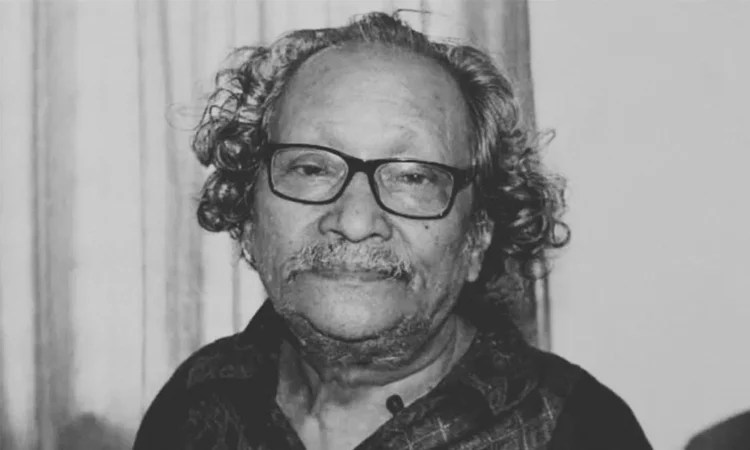
Sukumar Barua, rhymester of Bangladesh, winner of Ekushey Padak has passed away at age 84 in Chittagong. His honors include the Bangla Academy Award, the Ekushey Padak, the Bangladesh Shishu Academy Literary Award, the Agrani Bank Children’s Literature Honor, and the Alaol Children’s Literature Award.
In his memory, we present few of his classic rhymes, rendered in English translation, with the Bangla original at end of the post. We also present excerpts from a rare profile of him from Prothom Alo in 2023.
All right, all right (ঠিক আছে)
An untimely guest
walks in, sits down.
I explain all the ways
this is a mess.
He laughs and says,
All right, all right.
Rotten ration rice,
watery leftover dal,
the plate is cracked,
the bowl leaks too.
I warn him before we eat—
All right, all right.
Seeing the clouds,
the guest asks for an umbrella.
I show him the thing—
only a few ribs left.
Still he grins and says,
All right, all right.
In an interview with Prothom Alo in 2023, Barua recalled his earliest memories:
It was 1943. On one side there was the thunder of war; on the other, famine. Scarcity was everywhere. Sukumar was five years old at the time. His father, Sarbananda Barua, was a simple man. Poverty had overwhelmed him. What could he feed his helpless little son? One day he sold the only bucket the household had and brought home some broken rice. Eating the boiled rice filled their stomachs. After that, sometimes it was wild leafy greens, sometimes the soft core of a banana tree. That was how the days passed. Then one day Sarbananda went out carrying a machete. Little Sukumar wondered, What will Father bring today? He waited. The midday sun faded, afternoon passed, evening turned into night. Days, weeks, months, years went by. His father never returned. Sukumar’s mother, Kiran Bala, would often say, “Where did that man go, leaving with a machete in his hand?” Recalling the story, Sukumar said, “This happened eighty years ago. In that time, so much has happened in the life of the nation and in my own life. In 1947, two countries were born in the subcontinent. Through a world-shaking war of liberation, Bangladesh came into being. And my own life, too, did not stand still.”
After the 1971 liberation war, he penned one of his more political rhymes.
Freedom Fighters (মুক্তিসেনা)
Blessed are they, blessed indeed,
who took up arms in time of need
and went to fight, their hearts all free,
for the sake of the motherland’s plea.
Those who risked their very breath,
those who met a martyr’s death,
never sold by greed or gain
as foreign masters’ bought-in chain.
For the country, they leapt ahead,
struck with strength, the invaders fled,
crushing every occupying troop—
blessed are they, blessed through and through.
United workers, farmers too,
raising victory’s banner high and true,
on history’s golden page they stand,
counted first among the brave of the land.
The Prothom Alo report continues:
After his father disappeared, his mother Kiran Bala took him to her brother’s place in North Gujrat. They were very poor too. His uncle was a police constable, and the whole family survived on the one and a half taka he earned. Sukumar finished first grade there, but because of poverty he couldn’t stay long. His mother then sent him to a Buddhist monastery, where there was food, schooling, and a place to stay. But he didn’t last long there either. Talking about those days, Sukumar broke down in tears: “The head monk was very harsh. He would beat us over the smallest things. One day, for a tiny mistake, he hit me so badly that my head split open.” Raising his hand to his head, he said, “The scar is still there.” Unable to bear the beatings, third-grader Sukumar went back to his mother. She told him firmly, “If they come to take you back to the monastery, tell them: I’d rather die of hunger than go back.”
Contaminated (ভেজাল)
Everything is contaminated.
Food. Medicine.
Even the things we love.
It travels freely—
from Delhi to Dhaka,
from London to Tokyo to Venice.
How much of this contamination
has seeped into people themselves?
White in a moment,
black in the next—
and suddenly, strangely, green.
Even hatred is impure;
otherwise how could enemies
make peace so easily?
Even affection is mixed—
sweet words,
followed by a slap, a kick.
I see it in my writing too.
The ink is tainted.
The pen feels cold.
So many borrowed, broken languages
have piled up
inside Bengali itself.
We eat crops grown on poisoned soil,
and the poison climbs into the mind.
Otherwise, who would spend
an entire lifetime
calculating mistakes?
It’s not just life that’s corrupted—
death is too.
Why else do we perform rituals
for those we call heavenly?
This planet itself will one day
be contaminated
by its ties to other worlds.
I am drowning in grief for what is pure,
my chest overflowing,
crying for what we’ve lost.
Prothom Alo continued the amazing narrative of a life of art despite obstacles: Sukumar Barua couldn’t really continue school, but he never stopped reading. One day he got hold of a book by Sunirmal Basu called Hulusthul. He was so taken by its rhythm and the beauty of the language that he memorized the entire book. After that came Jogindranath Sarkar’s Hashikhushi—that went straight to his memory too. The rhythm of rhyme started boiling in his blood. One day, out of nowhere, a brand-new rhyme slipped out of his mouth. It wasn’t from any book. From then on, he was constantly making up rhymes on the spot. At the time, he regularly read Mukuler Mahfil in the Daily Azad, Khelaghar in Sangbad, and Shishu Sahitya from Kolkata’s Sahitya Kutir. One day, on a whim, he sent his writing to Kochikachar Asor in Ittefaq and to Khelaghar in Sangbad.
Khelaghar published one of his pieces. The rhyme was called “Brishti Neme Aay”, and it came out on July 3, 1968. People around him were surprised to learn that Sukumar—the cook in their rented houses and mess halls—was getting published in newspapers. Some even told him to quit cooking and focus on studying. But his monthly income, including food, was only 15–16 taka. Who was going to give him a better option? One day Sukumar took a long rhyme to the editor of Jamana, writer Mahbub Ul Alam. He told him, “When you’re working as a cook, do it properly. And when you sit down to write, you’re just like any of the great poets of the world.”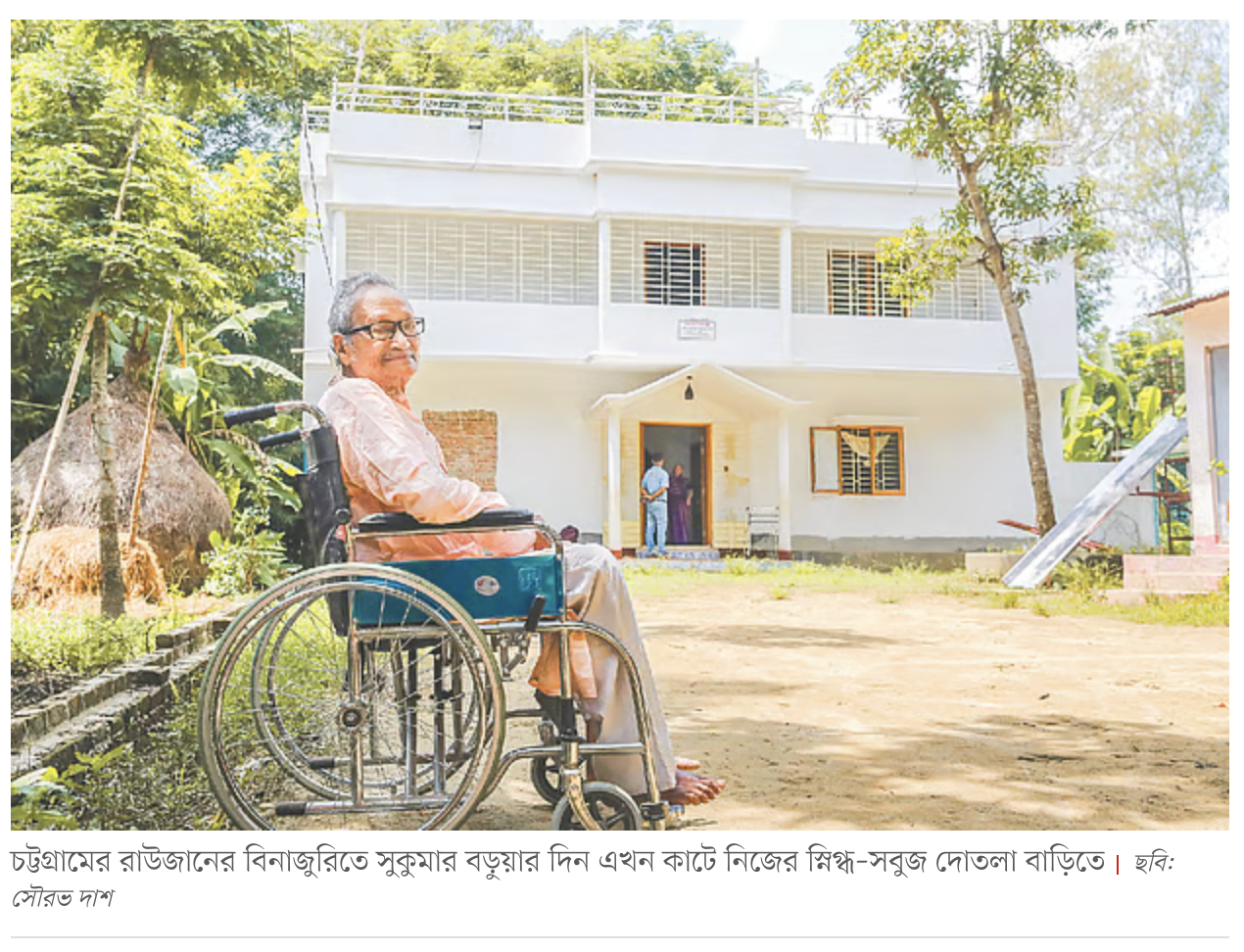
Sukumar never forgot that advice. He kept cooking as a cook and writing as a poet. Later he heard that cooks earned better pay in Dhaka—and that there were more chances to write for newspapers too. So one day in 1960, he left Chattogram for Dhaka. From then until 2021, Dhaka remained his home. For the first two years, he worked as a cook in different messes. In February 1962, he joined the University of Dhaka as a fourth-class employee in the Department of Biochemistry. Later, he moved to the Department of Nutrition as a third-class employee. 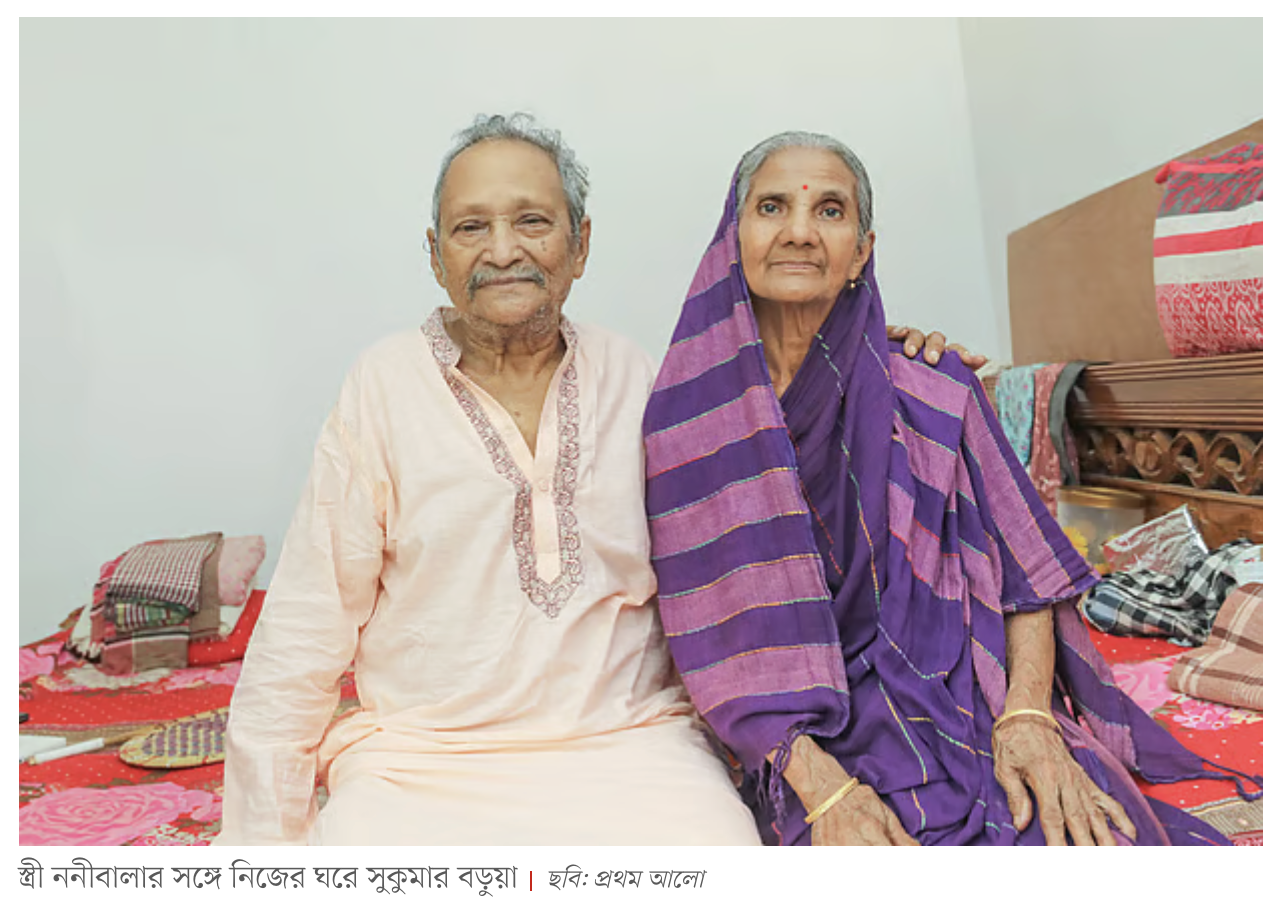
His last days were spent in Chittagong with his wife Nanibala, his son having migrated to Germany.
We leave readers with one more poem, which shows Sukumar Barua’s ability to comment on contemporary trends, while using the sweetest and gentlest of rhymes.
Data News (ডাটা সংবাদ)
Spinach stalks, gourd stalks,
bio-data stew in bowls,
if you want to process data,
open up your console.
Crazy old folks love their stalks,
packed with calcium power;
drumstick stalk has extra perks,
so its price just climbs each hour.
For higher degrees to be won,
data is the real treasure—
all year long they sweat and grind
collecting it in measure.
With lentils, fish, and daily meals,
stalks always play their role;
but a researcher’s “data,” well—
that’s a different kind of bowl.
ঠিক আছে
অসময়ে মেহমান
ঘরে ঢুকে বসে যান
বোঝালাম ঝামেলার
যতগুলো দিক আছে
তিনি হেসে বললেন
ঠিক আছে ঠিক আছে ।
রেশনের পচা চাল
টলটলে বাসি ডাল
থালাটাও ভাঙা-চোরা
বাটিটাও লিক আছে
খেতে বসে জানালেন
ঠিক আছে ঠিক আছে ।
মেঘ দেখে মেহমান
চাইলেন ছাতাখান
দেখালাম ছাতাটার
শুধু কটা শিক আছে
তবু তিনি বললেন
ঠিক আছে ঠিক আছে ।
মুক্তিসেনা
ধন্য সবাই ধন্য
অস্ত্র ধরে যুদ্ধ করে
মাতৃভূমির জন্য।
ধরল যারা জীবনবাজি
হলেন যারা শহীদ গাজি
লোভের টানে হয়নি যারা
ভিনদেশিদের পণ্য।
দেশের তরে ঝাঁপিয়ে পড়ে
শক্ত হাতে ঘায়েল করে
সব হানাদার সৈন্য
ধন্য ওরাই ধন্য।
এক হয়ে সব শ্রমিক কিষাণ
ওড়ায় যাদের বিজয় নিশান
ইতিহাসের সোনার পাতায়
ওরাই আগে গণ্য।
ভেজাল
খাদ্যে ভেজাল পথ্যে ভেজাল
ভেজাল শখের জিনিসে,
চলছে ভেজাল দিল্লি-ঢাকা
বিলেত-জাপান-ভিনিসে।
ভেজাল কত রইল মিশে
মানুষজনের চরিত্রে,
অমনি শাদা, অমনি কালো,
অমনি কেন হরিৎ-রে ?
হিংসাতেও ভেজাল থাকে
নইলে আবার মিলে যে,
স্নেহের ভেজাল ধরতে পারি
কানমলা-চড় কিলে যে।
লিখতে দেখি ভেজাল কালি !
কলম হল ঠাণ্ডারে,
হায় রে কত ভাষার ভেজাল
বঙ্গভাষার ভাণ্ডারে।
ভেজাল সারের ফসল খেয়ে
ঢুকছে ভেজাল মস্তকে,
নইলে সারা জীবন ধরে
ভুলের হিসাব কষত কে ?
জীবন শুধু ভেজাল নহে
ভেজাল থাকে মরণে,
নইলে কেন অর্ঘ্য দেব
স্বর্গবাসীর স্মরণে ?
ভেজাল হবে এই পৃথিবী
অন্য গ্রহের বন্ধনে,
খাঁটির শোকে মরছি আমি
বুক ভাসিয়ে ক্রন্দনে।
ডাটা সংবাদ
পুঁইয়ের ডাঁটা লাউয়ের ডাঁটা
বায়োডাটার ঝোল,
ডাটা প্রসেস করতে হলে
কম্পিউটার খোল।
ডাঁটার পাগল বুড়োবুড়ি
ক্যালসিয়ামে ভরা,
শজনে ডাঁটায় গুণ বেশি তাই
বাজার ভীষণ চড়া।
উচ্চতর ডিগ্রি নিতে
ডাটাই পরম ধন,
সারা বছর খেটে করেন
ডাটা কালেকশন।
ডালের সাথে মাছের সাথে
যেমন ডাঁটা চলে,
গবেষকের ডাটা আবার
অন্য কথা বলে।
 আলাল ও দুলাল | ALAL O DULAL