
By Irfan Chowdhury
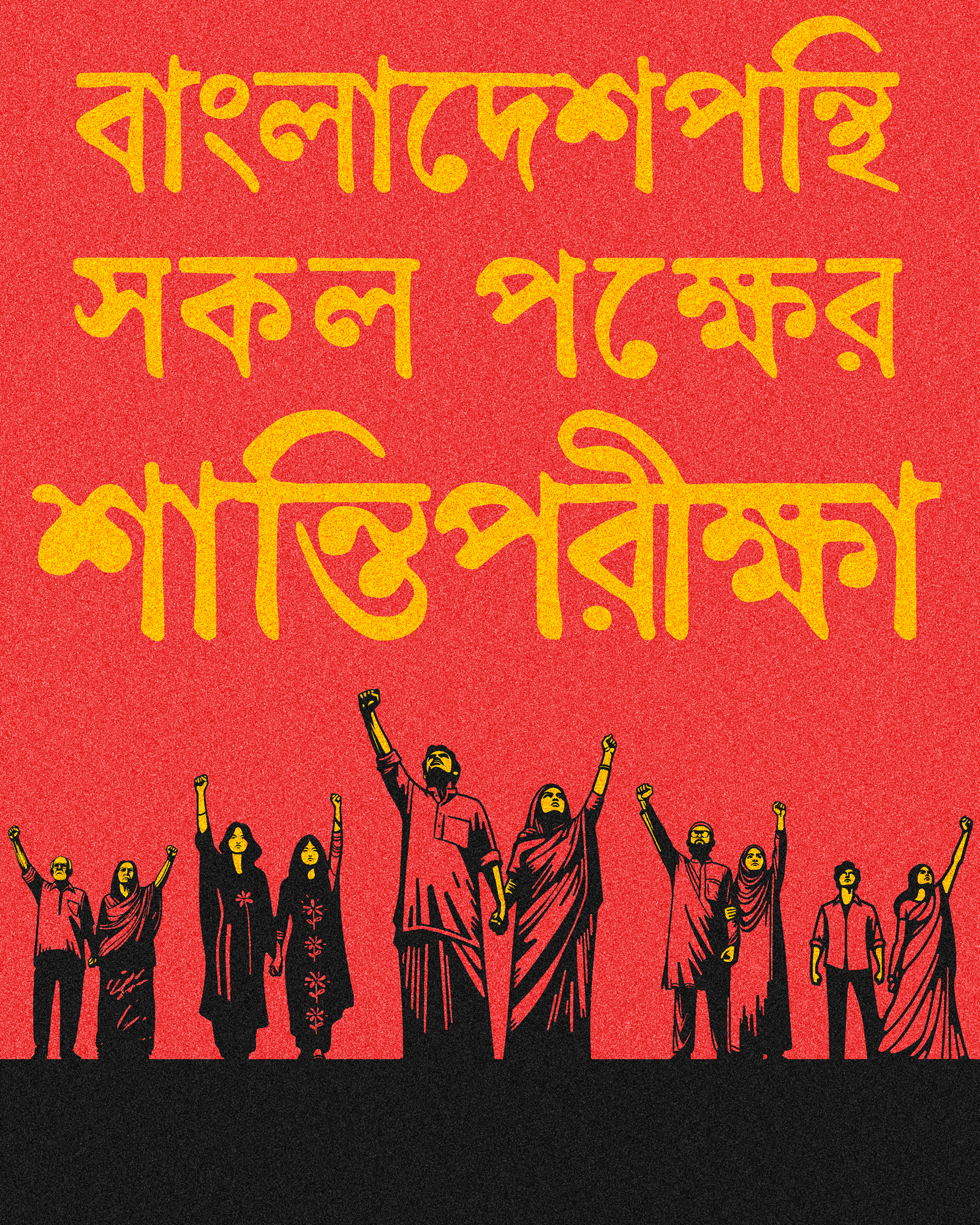
Parades, prayers, songs, speeches, celebrations and congratulations marked one year since the student uprising. Anniversaries are something we are quite used to. The nation has witnessed numerous instances in its post-colonial existence and 54 years as an independent nation-state.
A year into an interim government, there is worry that this anniversary is not as unifying as it needs to be. A national consensus remains elusive when it comes to the challenge of repairing democratic institutions that the previous regime destroyed. Myriad malaises that plague governance and administration remain intact. In a subcontinental intrigue style, the electoral and judicial reforms are astonishingly and dangerously delayed amid disagreements over their scope. Political powerbrokers and local muscle who provide operational vim to parties have focused on jockeying for advantage ahead of an election in 2026.
As in any uprising, ordinary people sacrificed their lives at the hands of repressive regimes for a better place for themselves and their next generations. Where they would have freedom to speak, to protest against unfairness, to seek justice and have economic independence and opportunities to earn an honest living. Akin to most post-colonial places, the fight against the rulers continues, as we struggle to establish unifying national narratives and embed a well-functioning system of governance. All of which are crucially underpinned by challenges of achieving economic emancipation, following years of colonial, post-colonial, and nation state oppression.
Alas, this unfortunate backdrop sets opportunists afoot. To reap, manipulate and control systems and wealth. In many guises, such as benevolent dictatorships that utilise nationalism, they pocket state resources and establish unfair economic processes and extractive social practices. This unfairness eventually reaches a threshold, when the society, unable to tolerate any longer, comes to the streets en masse and forces regimes to quit.
Countless lives are lost. The cycle starts afresh.
The uprisings that preceded 1947, 1969, 1971, 1990, 2006, 2008 and 2024 have varying contexts and build-ups. However, in all cases, it is mostly the younger population who wish to change the trajectory of the state. Unlike the 2024 July uprising, the Outcomes of earlier movements are now settled history. Debates exist over who were heroes and villains. Yet successive administrations have failed to provide a free and fair process, prioritising the interests of the country.
Bangladesh experiences polarisations around the history surrounding the protagonists who fought for and against the very creation of the nation state. To be sure, most nations are polarised. It is only natural that winners are at liberty to adjust situations, history included, to their advantage. Nor is it unique to our country.
Post-uprising Bangladesh has seen a shocking surge of right-wing, nationalistic and religious politics. Perhaps consistent with global trends, there is a sidelining and marginalisation of left-of-centre parties. This is crystallised in the current fate of Zonayed Saki’s Gana Samhati Party, which bravely fought against the previous regime when many others were cowed into silence. Yet in post-uprising Bangladesh have been pushed away from the national table. Women also played a frontal role in the uprising, and still, reforms on progressive issues such as women’s and minority groups’ rights appear elusive.
Reports of arbitrary retribution and rushed trial processes echo the hammer method of the last regime. To create a new, fair Bangladesh, it will be important to conduct thorough evidence-based trials of the accused from July 2024. Given ample evidence (e.g., video footage, audio recordings, witnesses) that is available for the deaths during the July uprising, why are such short-cut trials underway? A warning bell against rushed, summary judgment has been given by David Bergman, who was a brave and lonely voice against the kangaroo court trials of the previous regime. He was right then, and he is a clear voice today–but our national psyche only listens to flattery of “you have done right.”
Initial efforts to rebuild the state after the 2024 uprising sparked huge expectations. They vowed to draw lessons from the 1990 and 2007 experiences to propose new arrangements for Bangladesh. A significant number of scholars and ordinary people contributed enthusiastically to various think tanks, forums and consensus-building panels. The return of Bangladeshi-American scholars such as Ali Riaz to helm one of the crucial reform bodies, or exiled writers such as Zia Hassan and Tasneem Khalil, raised hopes that the interim government could properly channel the intellectual and economic power of the global diaspora. Those hopes have been shattered with the return of the familiar jockeying for position. Even giving voting rights to the diaspora has proven controversial in this interim arrangement.
During the short-lived “1/11” interim government of 2007-08, one major reform was completed: the creation of a national ID database. Bangladesh’s economy, governance, and law have moved ahead on the platform of this database. Can the current interim government accomplish something similar? With eight months until the elections, most of the crucial work is still incomplete. To its credit, the interim government has stabilised the economy and day-to-day governance as much as possible. The press and media are expressing opinions more freely, again.
Festoons, banners, flags and photographs of martyrs decorated cities and villages alike for this anniversary. Patriotic songs would have echoed out of loudspeakers. There is no imminent fear of getting arrested for expressing one’s opinion and gathering to voice your protest against the authorities. Indeed, it is an anniversary to be proud of, in spite of disappointments. Many selfless young people had given their lives for improvement, fairness and just governance.
In a few months, the humid discomfort of monsoon will give way to a pleasant tropical winter. An election has been announced for February 2026.
There is still time to break the familiar scripts.
Irfan Chowdhury is an opinion writer.
 আলাল ও দুলাল | ALAL O DULAL
Thank you for this insightful essay. I have deepened my understanding of the last year as a result.