Poor Countries Need to Think Twice About Social Distancing

By AHMED MUSHFIQ MOBARAK and  ZACHARY BARNETT-HOWELL

Policies imposed in rich countries to fight the coronavirus could have adverse effects in low-income nations—potentially endangering more lives than they save.

(Reprinted from Foreign Policy magazine where it was posted on 10 April.)

In response to the coronavirus pandemic, varying levels of social distancing have been implemented around the world, including in China, Europe, and much of the United States. Hundreds of millions of people have accepted dramatic disruptions to their daily lives and substantial economic losses based on the reasoning that slowing the spread of the coronavirus can keep health care systems from becoming overwhelmed. Continue reading “Poor Countries Need to Think Twice About Social Distancing”

Post-Crisis Rumor Mill

During an unprecedented attack like the one at Holey Artisan Bakery, crisis management is of utmost priority. Looking back, security forces did well to set up cordons to keep at bay meddlesome reporters. The subsequent media blackout, though late, was a good call and could feature in a standard operating procedure. In comparison with regional incidents, commandoes acted with reasonable urgency. However, medical evacuation appeared poorly managed and if not for the proximity of United Hospital, more lives may have been lost.

Continue reading “Post-Crisis Rumor Mill”

Dark Side of Our Sympathy

By Fardin Hasin for AlalODulal

In March 2016, a girl was brutally raped and murdered inside Comilla Cantonment. The crime was surrounded by a lot of mysteries, most of which are yet to be brought to light due to the authority’s unwillingness to do any proper investigation. People were quick to react; protests sprung up in both Dhaka and Comilla along with some other places. The hashtag #JusticeForX (I will not reveal her name here for reasons I am going to explain later) spread throughout Facebook; often complemented by cover photos depicting the words ‘Justice For X’ superimposed on the victim’s picture.

Continue reading “Dark Side of Our Sympathy”

Stop this Descent

by Zahur Ahmed for AlalODulal

Feedback’s quintessential song for Pohela Boishak, the first day of a Bengali New Year,  “Melay Jaire” has a line on the third stranza, “বখাটে ছেলের ভিড়ে ললনাদের রেহাই নাই — the crowd of ruffians won’t spare the girls”. The lyricist Maqsoodul Haque had a deep insight into our tradition, culture and attitude. What might have been overlooked as a humorous innuendo has become a sad reality during this year’s Bengali New Year celebrations, as a number of women fell victims to horrid gang assaults on broad day light amid the thousands enjoying the festivities.

Continue reading “Stop this Descent”

Sundarbans in Grave Danger and Our Government’s inaction

By Kallol Mustafa from Joymoni, Sundarbans
Translated by Tibra Ali for AlalODulal.org

Since the oil spill disaster started in the Sundarbans on the night of the 9th of December many ebbs and flows of the tide have come and gone. The thick and poisonous spilled oil reaches wherever the water reaches during the high tide, via the Shela river (where the disaster originated), Pasur and Baleshwari rivers, and the innumerable canals. Continue reading “Sundarbans in Grave Danger and Our Government’s inaction”

A Period of (Unprecedented) Consequences

A Period of (Unprecedented) Consequences

by Risalat Khan for AlalODulal.org

But the world is changing. The seemingly disconnected events and trends are mere manifestations of something deeper – a neocolonial corporatocracy that controls virtually all major world affairs. It profits from the arms supplied to war and the culture of war, claims all of Mother Nature’s resources as property for its own greed, and condemns billions to poverty and starvation as casualties of progress. This social order – a dark evolution of the colonial era evils – is inculcated and protected by a system of unfettered neoliberal capitalism. But despite its meteoric rise to dominion, it is now desperately hiding the tears at its seams.
Continue reading “A Period of (Unprecedented) Consequences”

AJ, Arrival of a Bangladeshi Hero

AJ, Arrival of a Bangladeshi Hero
by Irfan Chowdhury for AlalODulal.org

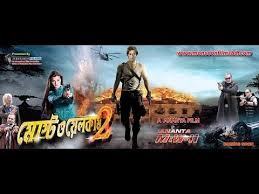
Bangladeshis rarely get to cheer their heroes, but when they do they are euphoric. They came out in droves to celebrate the nation’s first ever qualification for the cricket World Cup, and for some memorable wins since then. But wins have been few and far between. There were other celebrities and celebrations – the Nobel Prize for the Grameen Bank and its founder — but they would hardly match the glitz and glamour bestowed by a ‘would be’ Bangladeshi film or a cricket star.    
Continue reading “AJ, Arrival of a Bangladeshi Hero”

Publishing the images of teen sex workers is nothing but a showcase of poverty

টিনেজ যৌনকর্মীদের ছবি প্রকাশ, দারিদ্র্যতা শো করা ছাড়া অন্য কিছু না  – মৃদুল শাওন

ফেসবুকে কয়েকজনরে দেখলাম একটা লিঙ্ক শেয়ার দিতাছে। ‘BuzzFeed’ নামের একটা আমেরিকান ওয়েবসাইটে বাংলাদেশের টিনেজ-যৌনকর্মীদের তিরিশটা ছবি। শিরোনাম- “30 Tragic, Beautiful Photos Of Teenage Prostitutes In Bangladesh”। Continue reading “Publishing the images of teen sex workers is nothing but a showcase of poverty”

Reingkhyong Lake: The Forgotten Frontier of Bangladesh

By Devasish Roy-Wangza for AlalOdulal

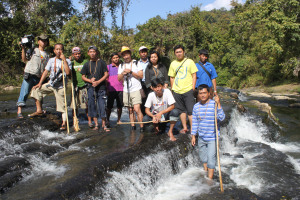
About thirty-five of us – including six women and about ten local men porters – took a seven-day trek from Farua village within Farua Union (“For-ua” in Tanchangya), Bileisori sub-district of Rangamati hill district to Bethuni Para, Ruma sub-district, Bandarban hill district, all within the Chittagong Hill Tracts (CHT) in southeastern Bangladesh, from 22 to 28 December, 2011.The team included former Farua Union Parishad (UP) member, Jacob Tripura,

Continue reading “Reingkhyong Lake: The Forgotten Frontier of Bangladesh”

Prashanta Tripura: Open letter to Prof. Anisuzzaman (‘nrigoshthi’ debate)


‘Even you, sir?’: On my open letter to Professor Anisuzzaman
by Prashanta Tripura for AlalODulal.org

I. Background: A Seminar

‘The Vice Chancellor of Dhaka University urges increased intercommunication’ would be an English translation of part of the headline of a Banglanews24.com report on a seminar held at the premises of DU on October 26, 2013. Continue reading “Prashanta Tripura: Open letter to Prof. Anisuzzaman (‘nrigoshthi’ debate)”

The Sundarbans and our guiltless sleep

The Sundarbans and our guiltless sleep

by Tibra Ali for AlalODulal.org

In the south-west of Bangladesh stand the Sundarbans, the largest mangrove forest in the world. The Sundarbans are home to countless unique species and varieties of animal and plant life, the most famous of which is the Royal Bengal Tiger that graces all the official emblems of Bangladesh. The Sundarbans are criss-crossed by rivers and tributaries, and because of their proximity to the Bay of Bengal, this is where the saline water of the Bay mingles with the fresh-water coming down from the Ganges. Continue reading “The Sundarbans and our guiltless sleep”

Dina Siddiqi: Do Bangladeshi factory workers need saving? Sisterhood in the post-sweatshop era

This 2009 article revisits the figure of the ‘third world sweatshop worker’, long iconic of the excesses of the global expansion of flexible accumulation in late twentieth-century capitalism. I am interested in how feminist activists concerned with the uneven impact of neo-liberal policies can engage in progressive political interventions without participating in the ‘culture of global moralism’ that continues to surround conventional representations of third world workers. Continue reading “Dina Siddiqi: Do Bangladeshi factory workers need saving? Sisterhood in the post-sweatshop era”

Seema Amin: The art of dehumanization

The art of dehumanization
by Seema Amin

‘A door marked enemy and no one home.’ Tom Engelhardt.
‘If you repeat a lie enough times, it becomes the truth.’ Electra, my love (1974 Hungarian film).

It will not be too overcast to say the 21st century (Anno Domini, whose 12 years and some hundred days have passed) has thus far been the century of the “enemy-industrial complex”. Continue reading “Seema Amin: The art of dehumanization”

Running barefoot through the city of Barbie liberty and sexy grenades

Running barefoot through the city of Barbie liberty and sexy grenades
by Faruk Wasif, translated from Bengali by Nayma Qayum for AlalODulal.org

In the morning I saw four teenagers on the pavement across the street from Mohammadpur Central College. They wore the usual jobba-tupi, but no footwear. Those, they had lost in Motijheel, and could not buy another pair. Continue reading “Running barefoot through the city of Barbie liberty and sexy grenades”

Silence speaks volumes

By Javed Jahangir
Prior to the outbreak of the recent violence in Bangladesh that pitted the police against the Jamaat-e-Islami, the conservative Islamic party, there was a stark silence among Western news outlets on the massive protests at Shahbagh junction in Dhaka. For 38 days and counting, up to a quarter of a million people have gathered peacefully everyday at Shahbagh, and elsewhere across the country, to demonstrate in favour of death sentences for those convicted of war crimes dating back to the country’s 1971 Liberation War against Pakistan. Shahbagh, and the subsequent violent backlash, was sparked by sentences handed down to leaders of the Jamaat, which collaborated with Pakistani forces in 1971 and has been tightly enmeshed in Bangladeshi politics ever since. Continue reading “Silence speaks volumes”

Reclaiming Ekattur: fashi, Bangali

Another blogger, who has spent the greater part of the week at Shahbagh, who is gratified at the ‘abject rejection of the BNP-Jamaat and JP [Jatiya Party] narrative of 1971’ stirringly writes, and I quote:
‘I will never agree on the death penalty for anyone…If it is handed down for a convicted war criminal, I’ll continue to work so that it is commuted to life imprisonment without the possibility of parole or Presidential clemency. Confiscate their property and compensate their victims, and let their children find their way out of the public humiliation and shame brought upon by the exposure of truth. Let us be better than them. I will continue to be there in Shahbagh even if I’m the last man standing, and I share this belief with millions of my brothers and sisters across our land’. (greaterboka, ‘A Week in Shahbagh’,  Alal o Dulal, February 14, 2013). Continue reading “Reclaiming Ekattur: fashi, Bangali”

1971: Missed Euphoria

Missed Euphoria

UDAYAN CHATTOPADHYAY ponders over what’s ‘missing’ from December 16th celebrations on both sides of the border.
DAILY STAR, December 2012

Every year, 16th December, known in India as Vijay Divas, is commemorated through low key events in a few select major cities across the country. There is rarely any fanfare; in Delhi, there is a brief and solemn ceremony with sparse attendance; protocol dictates the titles of those who must attend or send a replacement in lieu; a minute’s silence is held by the Eternal Flame by India Gate, and the event is generally very lacklustre. Continue reading “1971: Missed Euphoria”

Nafis: Terrorist Mastermind or Witless Patsy?

Blogger Rumi (a successful medical doctor in US who came here on a student visa in the 1980s): “The outrageous, inexcusable act of The Bangladeshi Student, facilitated and influenced by an FBI undercover agent, has claimed it’s first victim – the student visa system.”
Student visas concern after terror plot
Grand Jury to be convened

Source: bdnews24

Nafis was allegedly planning something for which he will go to jail for life. But, how far would he have actually got without help from the FBI? Below are some discussions in US blogosphere about this topic.

From comments section on ATLANTIC:

Chuñdy: No one is arguing that he shouldn’t face serious jail time. We are questioning whether the FBl and the media should be portraying this 21-year-old doofus as a terrorist mastermind. They caught a gullible wannabe jihadist who couldn’t tell the difference between an inert bomb and a real bomb. Don’t pee on my leg and tell me it’s raining.

Mark Holland A man who can be so easily compelled to mass murder is a real threat. On the other hand, people in the FBI are ordinary and thus more concerned with personal goals than abstractions. This case will make a lot of people at FBI very famous and later, very wealthy. I have zero pity for the kid and few illusions about the “public” sector.
Continue reading “Nafis: Terrorist Mastermind or Witless Patsy?”

Dhaka moves to #1 in Least Liveable City Index

Dhaka is ranked least liveable among 140 surveyed cities. Economist Intelligence Unit’s Global Livability Survey ranked Dhaka 139 in 2011, and 140 in 2012.

DOWNLOAD: EIU Liveability Report 2012

DOWNLOAD: Spatially Adjusted Index Report [Dhaka ranks 2 better on this]

Least livable cities: 2012
131. Abidjan, Côte d’Ivoire
132. Tehran, Iran
133. Douala, Cameroon
134. Tripoli, Libya
135. Karachi, Pakistan
136. Algiers, Algeria
137. Harare, Zimbabwe
138. Lagos, Nigeria
139. Port Moresby, Papua New Guineau
140. Dhaka, Bangladesh

Least livable cities: 2011
131. Abidjan, Côte d’Ivoire
132. Tehran, Iran
133. Douala, Cameroon
134. Karachi, Pakistan
135. Tripoli, Libya
136. Algiers, Algeria
137. Lagos, Nigeria
138. Port Moresby, Papua New Guinea
139. Dhaka, Bangladesh
140. Harare, Zimbabwe
Continue reading “Dhaka moves to #1 in Least Liveable City Index”
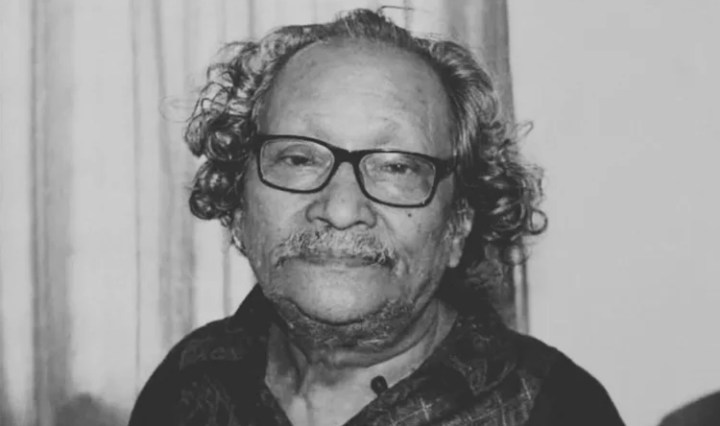
Contrarian Thoughts on Humayun Ahmed

Contrarian Thoughts on Humayun Ahmed
– by Bookworm Blogger

So Humayun Ahmed finally died a few days ago. Not unexpected really, considering his advanced age and his prolonged battle with cancer. You don’t really win fights like those in the end. He didn’t either.

I got the news as I was sitting in the bus, going to the mall. Facebook feeds on the mobile, of course, what else. All in all – and it’s now been several days, so my reactions have had time to settle – I find myself almost entirely unmoved by this event. Except perhaps for a brief moment of heaviness just after I heard the news. After all, this IS Humayun Ahmed. THE name to contend with in modern Bangladeshi fiction.
Sure, he was a very talented writer. Yet my enduring memories of reading Humayun are few and far between. In total, I can’t say that I read more than 12-15 of his books – and the last one was a good 20 years ago. Perhaps because towards the end – and for me, that would be 1992-93 – the crap content was so high that I felt there were far better uses of my time than reading the ramblings of some loser kid in a yellow punjabi or whatever the latest fad was that the Humayun word-machine was churning out to keep greedy publishers and childish readers happy. Continue reading “Contrarian Thoughts on Humayun Ahmed”